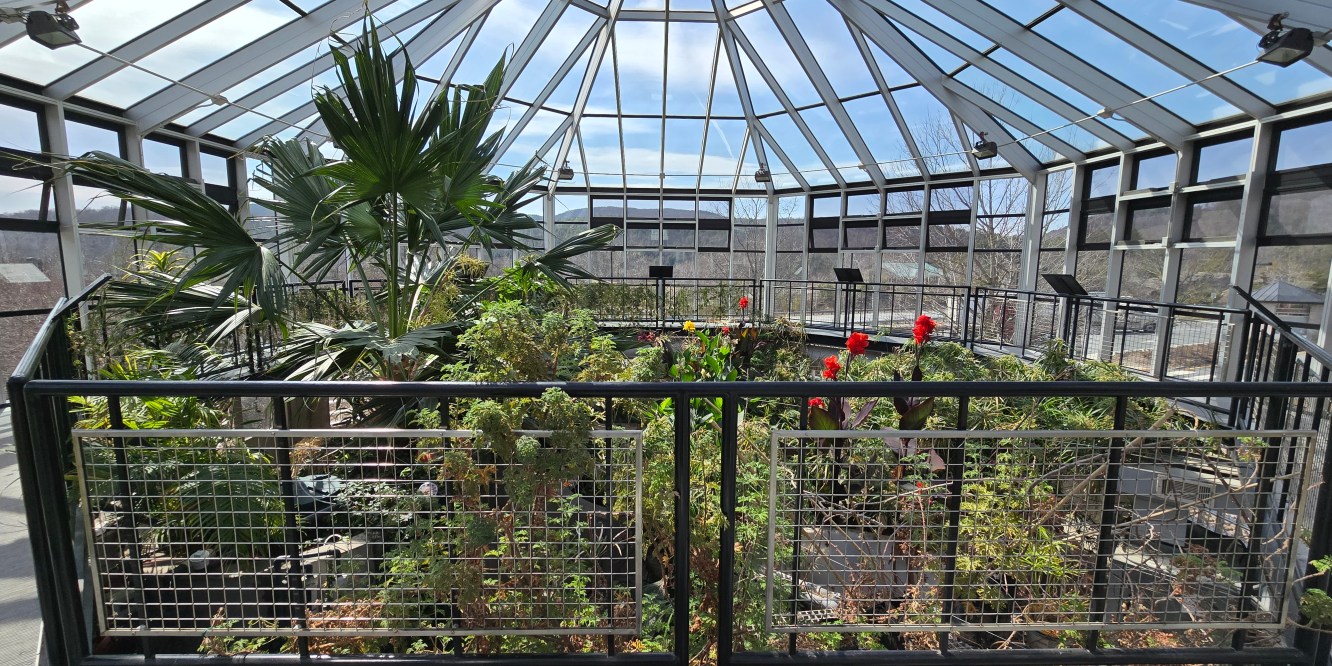
At the end of March, I visited Montreal. It’s not the traditional Spring Break destination. When I told the kindergartners I read to each week that I’d been to a place where there was snow on the ground and ice on the river, they were very excited and asked me if I saw any polar bears. While I didn’t spot any polar bears, it was the coldest weather I’ve experienced since we moved away from Massachusetts more than eight years ago. It reminded me of long New England winters and how thrilling the first glimpses of crocuses and skunk cabbage were as heralds of warmer weather to come. Walking through Montreal bundled up in scarves and mittens, it was difficult to imagine the place green and sunny as I know it is in summertime, just as difficult as it would be to visit there in the heat of summer and imagine it covered in snow. Both weather conditions are temporary, but they each feel something like permanent while they’re happening.
When I got home, a few things in my professional life came together in ways that left me feeling really good. I would go so far as to suggest that I’ve been feeling elated. The sun has been shining, the sky has been beautiful even when it’s cloudy, the air smells incredible, and things just feel a little easier than they sometimes do. But even in the midst of this sunny time, I feel an edge of concern because I know it’s temporary. Even as I enjoy feeling good, I worry about how I’ll feel then doubt and lower energy return. Because, just like winter follows summer (if we’re lucky, with autumn in between), those feelings will return.
But what’s interesting to me is that the down moods, while I’m in them, feel more permanent than the lovely moods. While I’m feeling elation, the temporary nature of the good mood is always there, but while I’m feeling down, it’s much more difficult to remember that I will eventually feel happy and at ease again. There’s this sense that I have to anticipate the good mood going away in order to protect myself from the not-as-good mood feeling so bad, but for some reason, the opposite inclination doesn’t happen during my down moods.
I’ve realized after long experience that anticipating the bad mood doesn’t make it less bad; it just prematurely takes the bloom off of the good mood. But what if it could work the other way, too? What if, while I’m feeling down, I anticipate the good mood? Could that take the edge off the bad mood?
So, I’m doing a little experiment. I’m doing my best to feel the good mood as fully as I can. I don’t need to remind myself that it’s temporary because I already know it is. I can enjoy feeling good while the feeling lasts, and I can keep in place the practices that I know help the bad moods feel lighter when they arrive. I can breathe deeply. I can appreciate the curiosity and energy of the students I work with. I can watch the hummingbirds at the feeders. I can feel the sunshine on my face (with sunscreen on). I can feel the strength of my muscles and how good it feels to stretch out and relax after a long day.
And maybe next time I feel down or low energy or when I’m back to chasing thoughts around inside my head, I can feel the down feelings fully, knowing that they’re temporary, too. I guess we’ll see.
I didn’t get as much reading done in March, but I got a few books read:
March Completed Books:
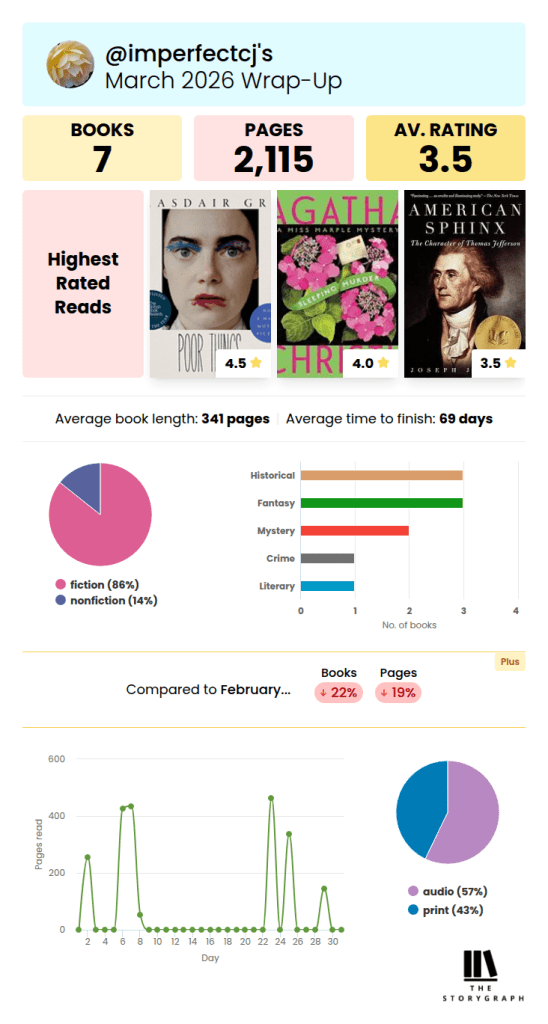

My favorites from March:
- Poor Things by Alasdair Gray
- Murder at the Bridal Bloom by Diane Scotland (I’m biased about this one as I narrated the audiobook. It’s on Audible, if you’d like to check out a preview.)
Currently Reading:
- Back to the Garden by Laurie R. King
- Swann’s Way by Marcel Proust
- Giant’s Bread by Mary Westmacott (Agatha Christie)
- James Madison by Richard Brookhiser

 Imperfect Happiness